
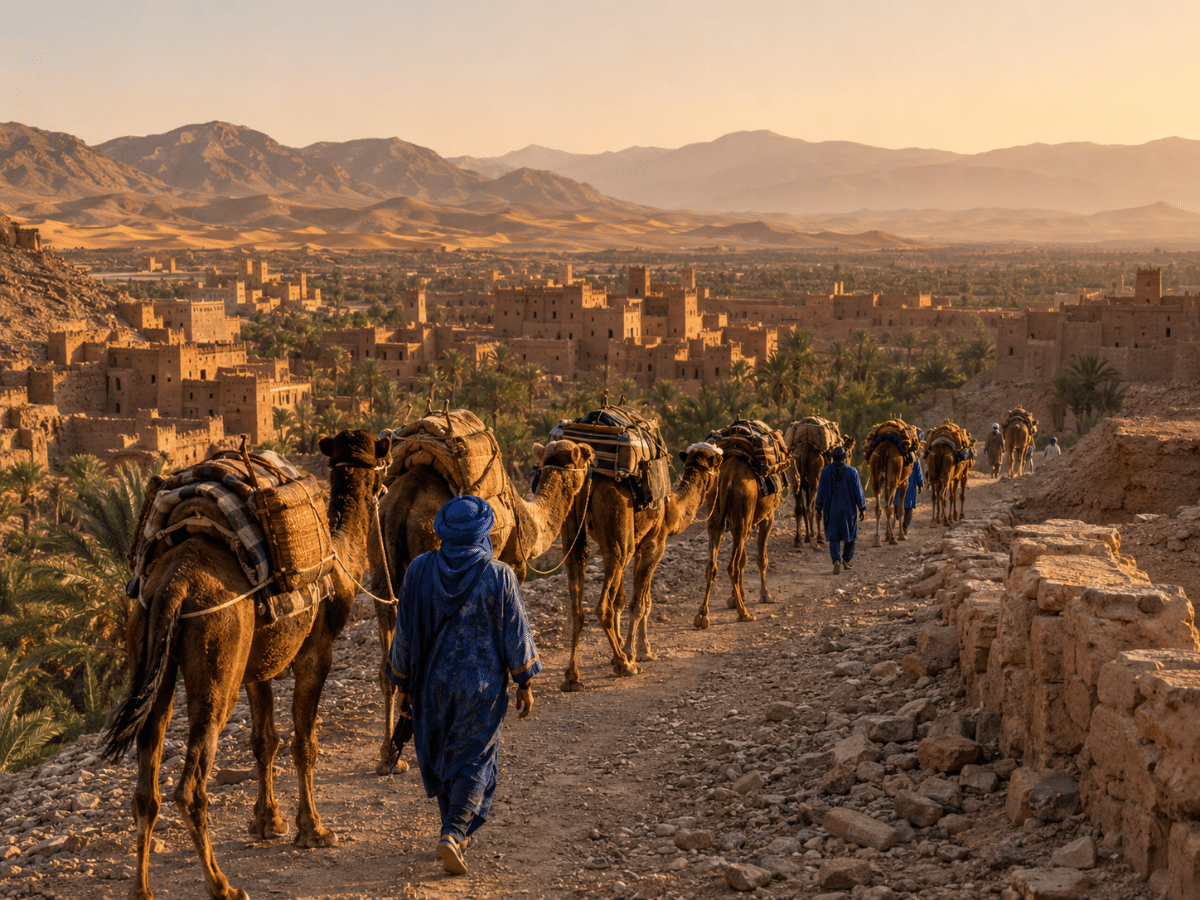
Ancient Trade Routes of Morocco | Explore Historic Caravan Paths
Discover Morocco’s Historic Caravan Trails, Desert Trading Cities and Trans-Saharan Heritage
For centuries, the Ancient Trade Routes of Morocco connected the Mediterranean world with the Sahara Desert and West Africa. Long before modern roads existed, merchants travelled between historic cities, mountain passes and desert oases, carrying valuable goods and sharing knowledge. As a result, these ancient trading networks helped shape Morocco’s economy, settlements and rich cultural identity.
The Ancient Trade Routes of Morocco were not one continuous road. Instead, they formed a network of routes linking northern markets with Saharan stopping points and important trading centres farther south. Camel caravans made long-distance desert travel possible, while towns and oases provided water, food, animals and opportunities for exchanging goods.
Today, visitors can explore historic medinas, kasbahs, oasis landscapes and archaeological sites connected with this remarkable past.
Why the Ancient Trade Routes of Morocco Mattered
Morocco’s position between the Mediterranean, the Atlantic and the Sahara made it an important meeting point for regional and international trade. Over time, routes changed according to political conditions, security, water supplies and market demand. Consequently, merchants used interconnected paths through the Atlas Mountains, pre-Saharan valleys and desert regions rather than following one fixed itinerary.
Goods transported through these networks included West African gold, Saharan salt, textiles, copper and other metals. In addition, spices and manufactured products circulated through wider regional markets. However, trade involved much more than merchandise. Travellers, scholars and religious communities also helped spread ideas, languages and artistic traditions between different regions.
Sijilmasa: A Gateway to Trans-Saharan Trade
Near present-day Rissani in the Tafilalt region, the medieval city of Sijilmasa became one of the most important northern gateways to trans-Saharan commerce. Established in the 8th century, it developed around the region’s oasis economy and its strategic position on routes leading towards the western Sahara and the Sahel.
Merchants gathered there to organise caravans and exchange goods before crossing the desert. In particular, gold from West Africa was highly valuable, while salt, textiles and other commodities also formed part of long-distance trade. Over time, Sijilmasa declined, and today its remains form an important archaeological site.
Its history helps explain why the Tafilalt became such a significant centre of Morocco’s desert heritage.
Camel Caravans and the Trans-Saharan Routes
Camels transformed desert commerce because they could carry heavy loads over long distances and cope with extremely dry conditions. Nevertheless, crossing the Sahara remained challenging. Caravan leaders and guides needed detailed knowledge of routes, wells, seasonal conditions and stopping places.
Depending on the destination and conditions, journeys could take weeks or even months. For example, some western routes connected the Tafilalt and other North African trading centres with places such as Taghaza, famous for its salt, and Timbuktu in the Sahel.
These routes formed interconnected networks rather than one straight track. Furthermore, their importance extended beyond commerce, as they supported relationships between communities across North and West Africa.
Marrakech: Markets and Connections to the South
Founded under the Almoravids in the late 11th century, Marrakech developed into a major political, cultural and commercial centre. Its location south of the High Atlas connected it with routes leading towards the Draa Valley, the Tafilalt and other Saharan regions, as well as cities farther north.
The city’s traditional souks became famous for leather goods, textiles, metalwork and spices. Today, visitors can explore the historic medina and its lively markets to discover how trade and craftsmanship remain important parts of Marrakech’s identity.
Moreover, the city’s traditional architecture and commercial quarters offer valuable insights into Morocco’s historical connections with neighbouring regions.
Aït Ben Haddou and the Southern Caravan Landscape
Aït Ben Haddou is a fortified earthen settlement, known as a ksar, in the Ounila Valley near the historic corridor between Marrakech and southern Morocco. Historically, the wider area formed part of routes crossing the High Atlas and connecting with the pre-Saharan valleys.
Along these corridors, settlements supported travellers through local exchange, agriculture and accommodation. Consequently, they played an important role in the region’s economic and social development.
Today, Aït Ben Haddou is recognised as a UNESCO World Heritage Site. Its striking mud-brick buildings, defensive towers and traditional architecture make it an especially rewarding destination for visitors interested in Moroccan history and culture.
The Draa Valley and the Tafilalt Today
The Draa Valley is famous for its extensive palm groves, traditional villages and historic kasbahs. For centuries, its oasis communities depended on agriculture and local trade. At the same time, the valley formed part of wider north–south travel networks.
Further east, the Tafilalt region and Rissani preserve strong connections to the history of Sijilmasa. Visitors can explore traditional markets and oasis landscapes before continuing towards Merzouga and the impressive Erg Chebbi dunes.
Although Merzouga is a modern desert tourism destination rather than an ancient trading city, it offers an opportunity to experience the Sahara landscapes that once shaped caravan travel.
How Trade Shaped Moroccan Culture
Trade encouraged contact between Amazigh, Arab, African, Andalusian and Mediterranean communities. Through religious, scholarly and commercial networks, different traditions and ideas travelled across the region.
As a result, Moroccan architecture, music, food, languages and craftsmanship developed through centuries of cultural interaction. Historic medinas, caravan-related settlements, kasbahs, traditional markets and oasis villages still reflect these connections.
Therefore, Morocco’s heritage cannot be attributed to trade alone. Nevertheless, commerce was an important force that helped communities exchange knowledge and influence one another.
Explore Morocco’s Historic Trade Regions
A journey through southern Morocco offers an excellent opportunity to discover the country’s historic trading regions. For example, you can include the following destinations in your itinerary:
- Marrakech: Explore the historic medina, traditional souks and impressive monuments.
- Aït Ben Haddou: Discover a UNESCO-listed fortified village and its remarkable earthen architecture.
- Ouarzazate: Visit historic kasbahs and explore the gateway to southern Morocco.
- Draa Valley: Admire extensive palm groves, traditional villages and historic kasbahs.
- Rissani and Tafilalt: Discover the region associated with Sijilmasa and its important trading history.
- Merzouga: Experience the impressive Erg Chebbi dunes and the landscapes of the Sahara Desert.
Today, modern roads connect these destinations through popular touring routes. However, they should not all be considered sections of one unchanged ancient caravan road.
Instead, each destination offers a different perspective on Morocco’s historical and cultural development. A knowledgeable local guide can explain how these regions were connected and how their roles have changed over time.
Frequently Asked Questions
What were Morocco’s ancient trade routes?
They were networks of land routes connecting Moroccan cities and oasis settlements with the Sahara, West Africa and Mediterranean markets. Merchants exchanged valuable goods such as gold, salt, textiles and metals.
Why was Sijilmasa important?
Sijilmasa was a major medieval trading centre in the Tafilalt region. Moreover, it served as an important northern gateway for caravans travelling towards the western Sahara and the Sahel.
Did caravans travel from Morocco to Timbuktu?
Yes. Several trans-Saharan routes connected North African trading centres with Timbuktu and other Sahelian markets. However, the routes and stopping points varied according to historical conditions.
Can visitors explore these historic areas today?
Yes. Marrakech, Aït Ben Haddou, the Draa Valley, Rissani and the Tafilalt can all be included in a modern Morocco itinerary. Visitors follow present-day roads while discovering historic places associated with the wider trade networks.
Discover Morocco with Sahara Family Tours
The Ancient Trade Routes of Morocco reveal how geography, commerce and cultural exchange shaped the country’s history. From Marrakech’s lively souks to the beautiful oasis landscapes of the south, every destination offers a different perspective on Morocco’s fascinating past.
At Sahara Family Tours, we organise private journeys through historic kasbahs, traditional markets, mountain landscapes and the Sahara Desert. Whether you are travelling as a couple, with family or with friends, we can help create an itinerary suited to your interests and travel pace.
Discover Morocco’s history and experience its remarkable landscapes with a private tour organised by Sahara Family Tours.
📧 Email: saharafamilytours@gmail.com
💬 WhatsApp: Contact us directly using the WhatsApp button on our website for quick assistance and personalised tour planning.¿
